Source-reviewed guide. Evidence gaps are stated explicitly; regulations remain local.
Identification
Tiny teeth and a head deeper than wide; small mouth structures require close examination to separate similar mullets.
Where to find it
The documented Caribbean areas and their occurrence sources are listed below. Historic records do not establish present abundance.
Habitat
Inshore marine waters and estuaries; the account says it is not usually freshwater.
Depth
Information unavailable in the species sources reviewed; no species-specific recommendation is inferred.
Best season
Information unavailable in the species sources reviewed; no species-specific recommendation is inferred.
Best time
Information unavailable in the species sources reviewed; no species-specific recommendation is inferred.
Best tides
Information unavailable in the species sources reviewed; no species-specific recommendation is inferred.
Best weather / conditions
Information unavailable in the species sources reviewed; no species-specific recommendation is inferred.
Best bait
Information unavailable in the species sources reviewed; no species-specific recommendation is inferred.
Best artificial lures
Information unavailable in the species sources reviewed; no species-specific recommendation is inferred.
Tackle setup
Information unavailable in the species sources reviewed; no species-specific recommendation is inferred.
Hook size
Information unavailable in the species sources reviewed; no species-specific recommendation is inferred.
Line
Information unavailable in the species sources reviewed; no species-specific recommendation is inferred.
Leader
Information unavailable in the species sources reviewed; no species-specific recommendation is inferred.
Fishing techniques
FAO documents gillnets, seines. These include historical commercial or incidental catches; they are not ranked as best or assumed legal locally.
Step-by-step: how to catch it
- Confirm identification and local rules.
- Use only a method permitted locally; the methods section distinguishes documented practice from unavailable advice.
- Release any protected, uncertain or unwanted catch promptly using appropriate handling.
Typical size
FAO common size: to 35 cm total length. Not an island-specific catch average.
Maximum size
FAO account maximum: 91 cm total length. Historical reference value, not a current angling record.
Edibility
Human food use documented; not a safety guarantee or permission to retain.
Cleaning
Keep lawful food catches chilled. A species-specific cleaning procedure is unavailable in the reviewed sources.
Cooking suggestions
General idea for lawful food catches: bake a portion and use a thermometer to check 63°C / 145°F. This is not a species-specific recipe.
Clean It & Choose Your Cut
Process this catch only after confirming it is legal to retain. Cleaning instructions do not establish harvest permission.
Food safety: Food safety: keep seafood cold, prevent cross-contamination, wash hands and tools, and refrigerate promptly.
Recommended cuts
- Skin-on fillet
- Skinless fillet
- Whole cleaned fish
- Steaks for larger fish
Cleaning steps
- Keep the catch cold from the moment it is legally retained.
- Use a clean, stable cutting surface and a sharp dedicated fillet knife.
- Scale first if cooking the fish whole or keeping skin-on portions and the species has scales.
- For fillets, cut behind the gill plate toward the backbone, then follow the backbone toward the tail with controlled strokes.
- Trim ribs and remove pin bones where present; remove skin only if the recipe calls for it.
- Rinse only as needed to remove visible debris, then pat dry; keep the edible portion cold and cook or refrigerate promptly.
Anatomy varies by species. These are general finfish steps, not a species-specific anatomical guarantee.
How would you like it cooked?
Choose a style and open the full recipe.
Recipe availability does not mean you may keep this species today. Verify current Puerto Rico and federal size, bag, season, area, gear and protected-species rules before harvest.
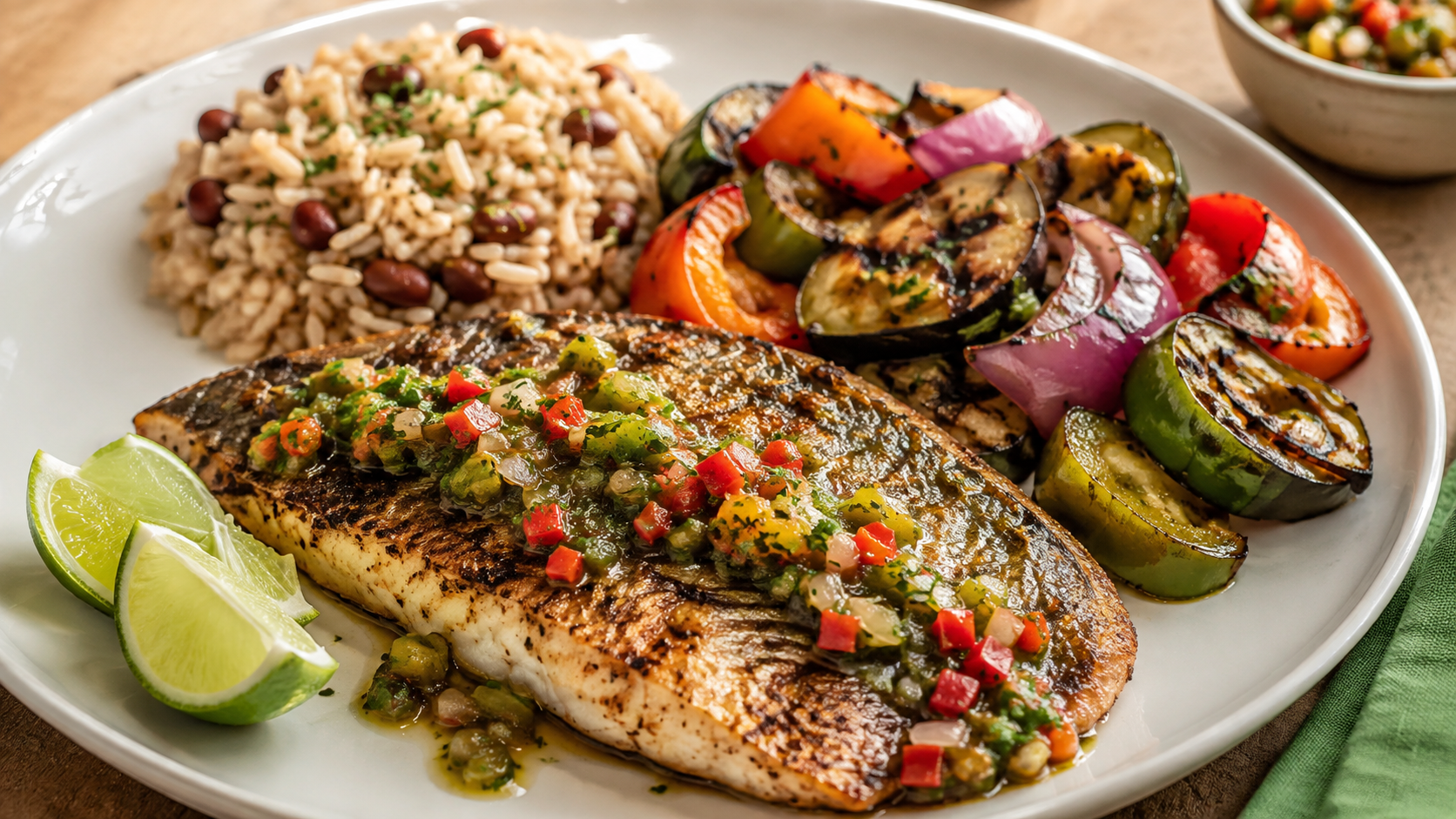 White mullet al Ajillo — Puerto Rican Style15 min prep · 20 min cook · 2–4Sides: Mofongo, Mango-avocado salad, Green beans with garlicView full recipe →Cuban Mojo White mullet15 min prep · 25 min cook · 2–4Sides: Roasted potatoes, Avocado-onion salad, Roasted peppersView full recipe →Herb-Grilled White mullet — American Style15 min prep · 20 min cook · 2–4Sides: Wild rice, Cabbage slaw, Grilled vegetablesView full recipe →Spanish Garlic-Paprika White mullet15 min prep · 25 min cook · 2–4Sides: Garlic rice, Cucumber-tomato salad, Roasted peppersView full recipe →Mexican Chile-Lime White mullet15 min prep · 25 min cook · 2–4Sides: Mexican rice, Cucumber-jícama salad, Sautéed zucchiniView full recipe →Thai Lime-Chili White mullet15 min prep · 25 min cook · 2–4Sides: Lemongrass rice, Cucumber-lime salad, Stir-fried vegetablesView full recipe →Chinese Ginger-Scallion White mullet15 min prep · 25 min cook · 2–4Sides: Garlic rice, Radish-cucumber salad, Mushrooms and greensView full recipe →French Lemon-Butter White mullet15 min prep · 25 min cook · 2–4Sides: Herbed rice, Simple green salad, RatatouilleView full recipe →Peruvian Ají-Lime White mullet15 min prep · 25 min cook · 2–4Sides: Cilantro rice, Tomato-onion salad, Roasted root vegetablesView full recipe →Japanese Miso-Glazed White mullet15 min prep · 25 min cook · 2–4Sides: Steamed rice, Cabbage-sesame salad, Garlic greensView full recipe →Italian Tomato-Caper White mullet15 min prep · 25 min cook · 2–4Sides: Soft polenta, Fresh herb salad, Sautéed mushroomsView full recipe →
Sushi & Japanese Raw/Cooked Options
RAW SEAFOOD SAFETY: A freshly caught fish is not automatically safe to eat raw. Raw or undercooked seafood can contain parasites and harmful germs. FDA says cooking is the safest route. For fish subject to parasite-destruction freezing, the FDA Food Code lists time/temperature controls such as -4°F (-20°C) for 7 days, -31°F (-35°C) until solid then 15 hours at -31°F, or -31°F until solid then 24 hours at -4°F. Some specified tuna and other products have exemptions. Freezing does not kill every harmful germ. People at higher risk of foodborne illness should avoid raw or undercooked seafood.
A fully cooked fish roll with seasoned sushi rice, cucumber and scallion.
Cooked/seared fish served over seasoned rice with cucumber, scallion and sesame.
Raw-style preparation is shown only with the FDA raw-seafood safety gate; fresh catch alone is not sufficient.
Raw slices are not presented as automatically safe; verify species, handling, freezing requirements/exemptions and personal risk.
Safety warnings
Keep hands clear of hooks, spines and the mouth. Consult the release guidance and any species-specific warnings before handling.
Regulations
Verify the rules for the actual fishing area before targeting or retaining this species. Unknown means pending verification, not unrestricted harvest. Area-specific classifications and sources appear below.
Conservation
Documented occurrence is not a population assessment. Avoid habitat damage and follow the local status below; protected occurrences are encounters, not harvest targets.
Physical appearance
Green-blue to olive back, silver sides and a yellowish blotch behind the eye.
Diet
Juveniles eat plankton; adults consume organic detritus and fine particles.
Behavior
Schooling or aggregations are documented in the species account.
Fishing depth
Information unavailable in the species sources reviewed; no species-specific recommendation is inferred.
Fishing environments
Inshore marine waters and estuaries; the account says it is not usually freshwater. This is species-level habitat context, not proof for every linked area.
Table quality
Human food use is documented in the catalog. A supported species-specific taste or texture description is unavailable in this review.
Catch and release
For an ordinary small fish, minimize handling and air exposure, support its body and use a dehooker. Species-specific hazards take precedence.
Documented Caribbean areas and local rules
- Puerto Rico — Unknown — pending verification
- U.S. Virgin Islands — Unknown — pending verification
- British Virgin Islands — Unknown — pending verification
- Saint Martin — Unknown — pending verification
- Saint Kitts and Nevis — Unknown — pending verification
- Antigua and Barbuda — Unknown — pending verification
- Montserrat — Unknown — pending verification
- Guadeloupe — Unknown — pending verification
- Dominica — Unknown — pending verification
- Martinique — Unknown — pending verification
- Saint Lucia — Unknown — pending verification
- Saint Vincent and the Grenadines — Unknown — pending verification
- Barbados — Unknown — pending verification
- Grenada — Unknown — pending verification
- Trinidad and Tobago — Unknown — pending verification
- Aruba — Unknown — pending verification
- Curaçao — Unknown — pending verification
- Bonaire — Unknown — pending verification
- Bahamas — Unknown — pending verification
- Turks and Caicos Islands — Unknown — pending verification
- Cayman Islands — Unknown — pending verification
- Jamaica — Unknown — pending verification
- Cuba — Unknown — pending verification
- Haiti — Unknown — pending verification
- Dominican Republic — Unknown — pending verification
Sources and field evidence
- Big Joe Caribbean catalog — individual occurrence and local rule sources retained
- FAO Western Central Atlantic, volume 2, PDF pages 488
- FDA — Selecting and serving seafood safely
- FWC — Fish handling and gear
Other names: No synonyms recorded.