
Freshwater
Lake trout (laker)
Trucha de lago
Salvelinus namaycush
Guide by Captain Big Joe (Joe Arias)
At a glance
Most are around 20 in (50 cm).
From 10 ft to 200 ft deep (3–61 m), usually 59 ft–174 ft (18–53 m).
Any time of day; morning is best in shallow water.
6 areas
Know it
Spot it, size it up and learn its habits.
- Identification
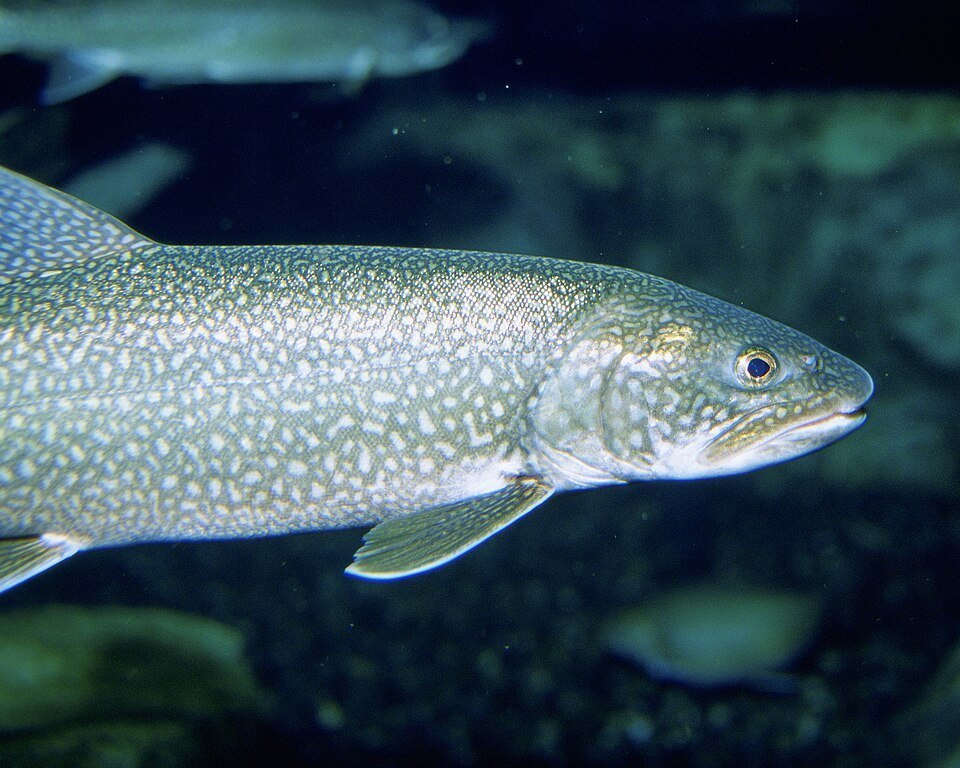
A char: gray-green to dark body covered with pale cream spots (no red spots) and a deeply forked tail.
- Typical size
Most are around 20 in (50 cm).
- Maximum size
Up to about 4.9 ft (150 cm) long and 72 lb (32.7 kg). Source: FishBase
- Diet
It eats many things such as freshwater sponges, crustaceans, insects, fishes (preferring ciscoes) and small mammals. Some populations eat plankton all their lives.
- Behavior
It lives in shallow and deep waters of northern lakes and streams, and only in fairly deep lakes farther south. It is a solitary wanderer.
Find it
Where, when and how deep to look.
- Where to find it
Found from Yukon, NWT & Nunavut, Northern Ontario, Canadian Prairies, Hudson Bay & Labrador, Ontario Great Lakes and Quebec.
- Habitat
Big, deep, cold lakes: Great Bear and Great Slave lakes, Lake Athabasca, the lakes of northern Ontario and the Canadian Shield, and Lakes Ontario, Huron and Superior.
- Depth
From 10 ft to 200 ft deep (3–61 m), usually 59 ft–174 ft (18–53 m).
- Fishing depth
Surface to 20 ft after ice-out; 40–150 ft in summer.
- Best season
Right after ice-out (shallow), late summer (deep), and through the ice in winter.
- Best time
Any time of day; morning is best in shallow water.
- Best tides
No tide.
- Best weather / conditions
Calm days for jigging deep water; cold, windy days in spring keep fish shallow.
Bait & gear
What to tie on and what to throw.
- Best bait
Cut cisco or smelt on the bottom, or a minnow on a jig.
- Best artificial lures
Spoons, white tube jigs, big swimbaits and blade baits.
- Tackle setup
7 ft medium spinning or casting rod; downriggers or lead-core line for trolling deep.
- Hook size
Spoons and tube jigs with single or treble hooks; small hooks for whitefish.
- Line
10–20 lb braid or mono.
- Leader
10–15 lb fluorocarbon.
BigJoe's setup for Lake trout (laker)
The rod, reel, line and lures BigJoe would use.
As an Amazon Associate, BigJoe earns from qualifying purchases. It costs you nothing extra and helps keep this guide free.
Catch it
Step by step, from first cast to landing.
Step-by-step: how to catch it
- Go where it lives: Big, deep, cold lakes: Great Bear and Great Slave lakes, Lake Athabasca, the lakes of northern Ontario and the Canadian Shield, and Lakes Ontario, Huron and Superior.
- Rig up: 7 ft medium spinning or casting rod; downriggers or lead-core line for trolling deep. 10–15 lb fluorocarbon.
- Pick your bait: Cut cisco or smelt on the bottom, or a minnow on a jig. Lures: Spoons, white tube jigs, big swimbaits and blade baits.
- Fish it: After ice-out, cast spoons along rocky shorelines. In summer, jig tubes on deep humps or troll spoons on downriggers in the cold water.
- Time it: Any time of day; morning is best in shallow water. No tide.
- Fishing techniques
After ice-out, cast spoons along rocky shorelines. In summer, jig tubes on deep humps or troll spoons on downriggers in the cold water.
- BigJoe's tip
A 30-lb laker from a northern lake can be 40 years old. Keep a small one for shore lunch and let the big ones go.
- Catch and release
Catch and release: wet your hands, keep the fish in the water when you can, and release it quickly. Use circle hooks and a dehooker.
Clean & cook
Is it good to eat, and how to prepare it.
- Edibility
Good eating when fresh.
- Cleaning
Bleed and ice it right away. Fillet, then remove the skin and any dark bloodline.
- Cooking suggestions
Rich, orange to white meat, excellent grilled or smoked. Smaller fish taste best.
Stay safe & legal
Safety, rules and taking care of the fishery.
- Safety warnings
Cold water kills fast — wear a life jacket on big northern lakes, and test ice before you walk on it.
- Regulations
Northern lake trout grow very slowly, so many lakes have a limit of one fish, a trophy size limit, or catch-and-release only. Licenses, limits and seasons are set by each province, territory or state, and many lakes and rivers have special size limits, slot limits or closed spawning seasons — check the current regulations for the water you fish.
- Conservation
Keep only what you'll eat, release the rest quickly, and follow size and bag limits.
Where it's found
Tap an area to open its fishing map.